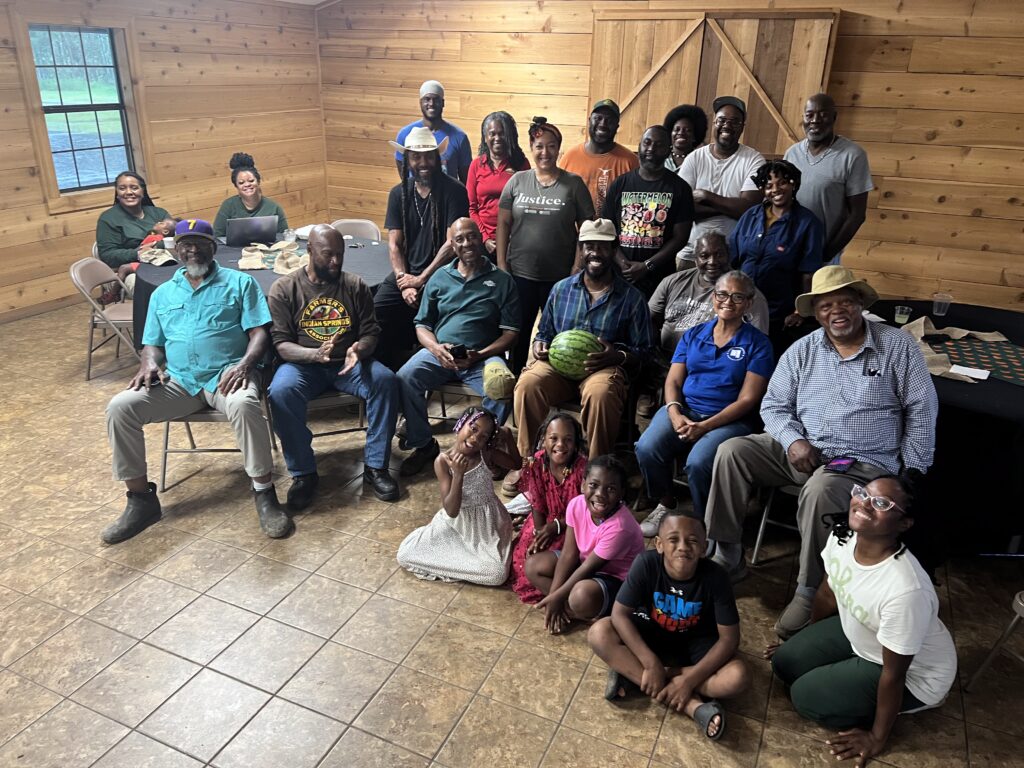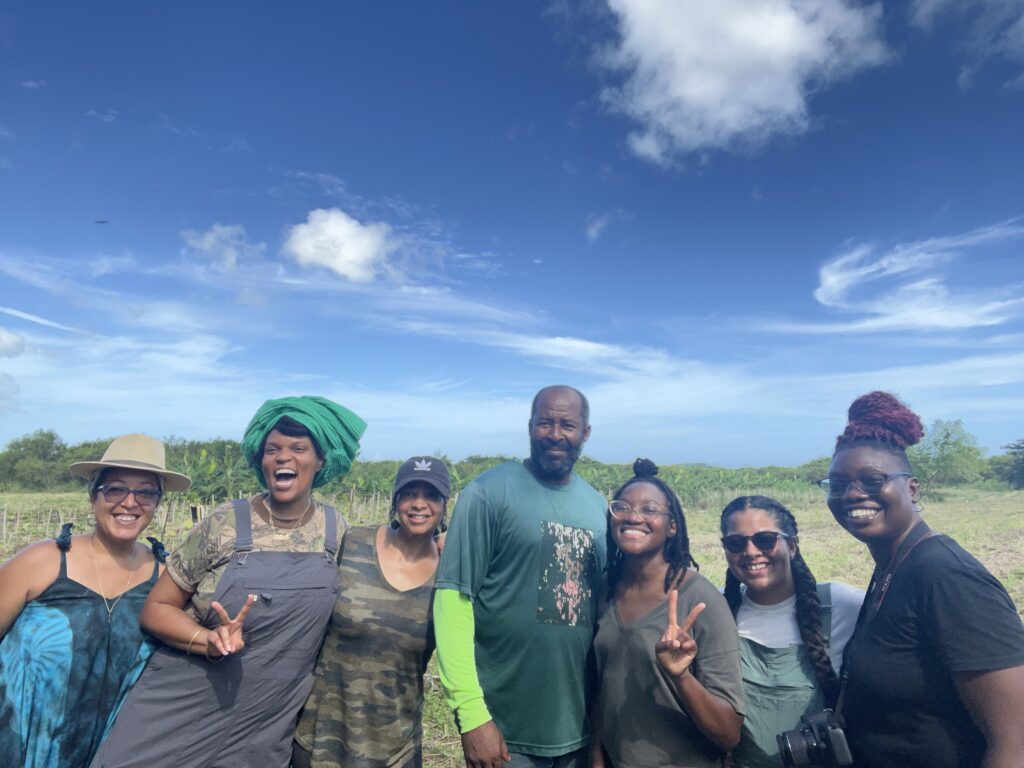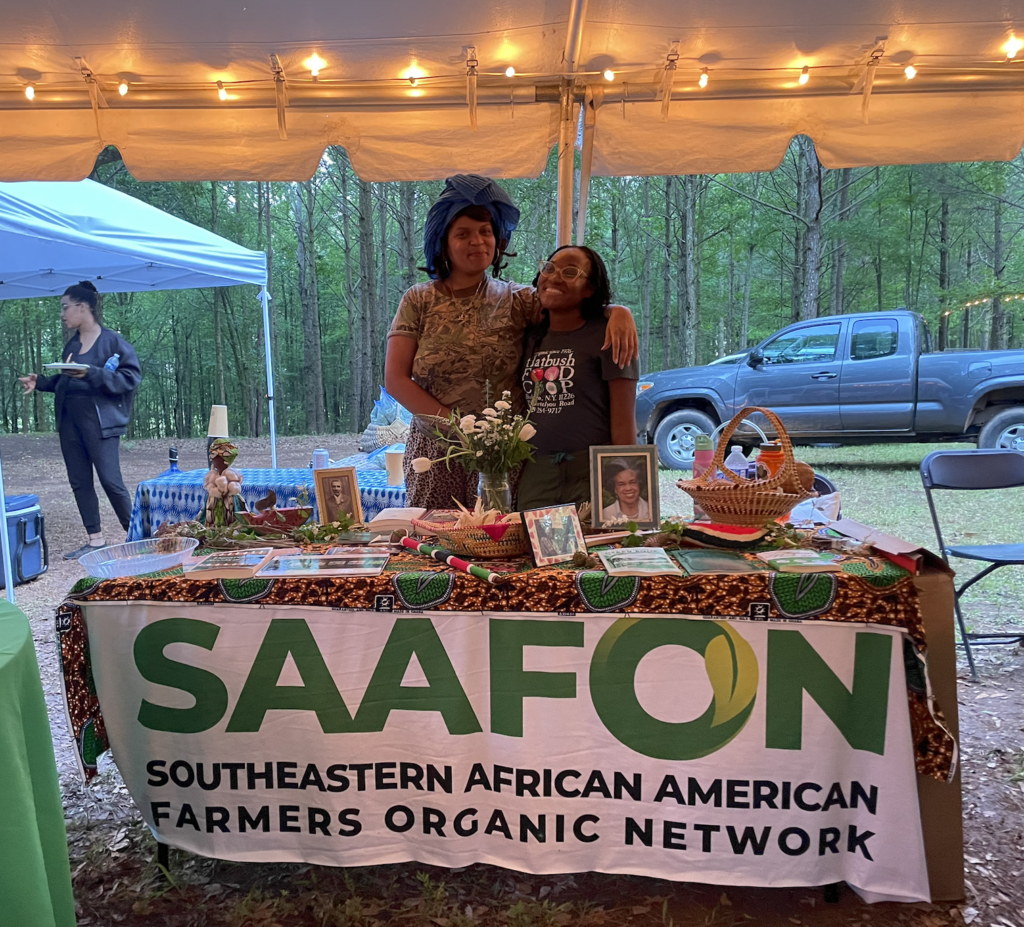
The crafting of SAAFON’s Farmer Brigades over the past five years has laid the foundation for a model of mutual aid and kinship building that connects our principles with our practices. Operating from a legacy of mutuality and collectivism, our solidarity and seasonal farmer brigade model represents a commitment to community survival, and helps keep our farm communities nimble, responsive, and joyful. The brigade in Virginia was no exception.
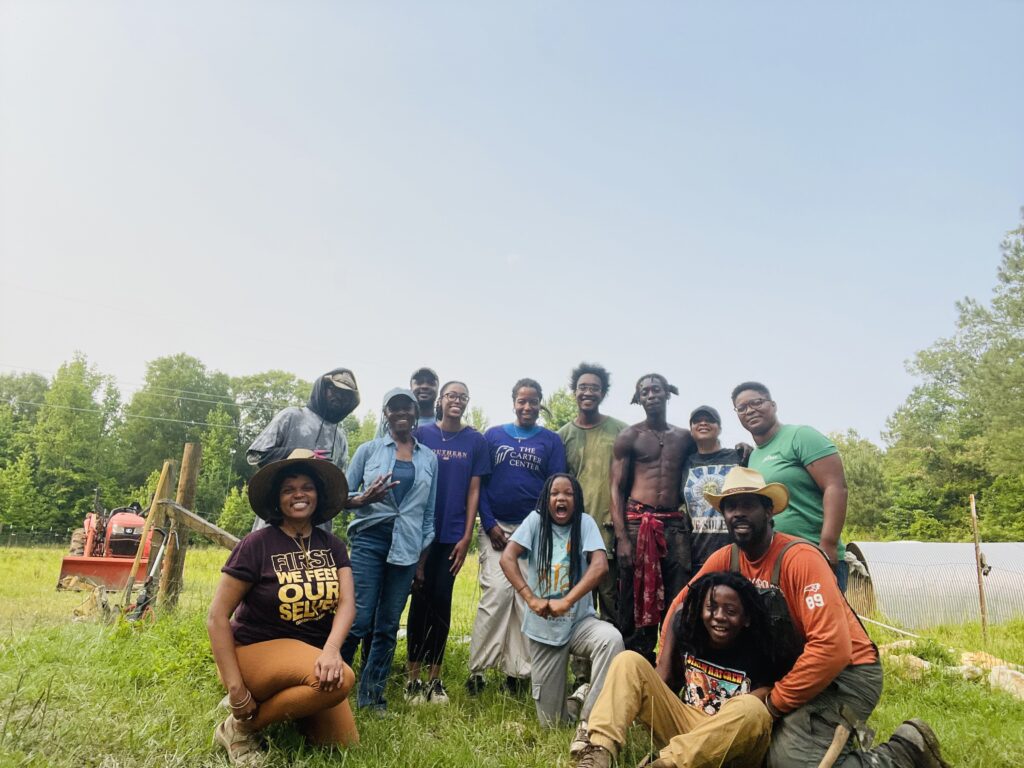
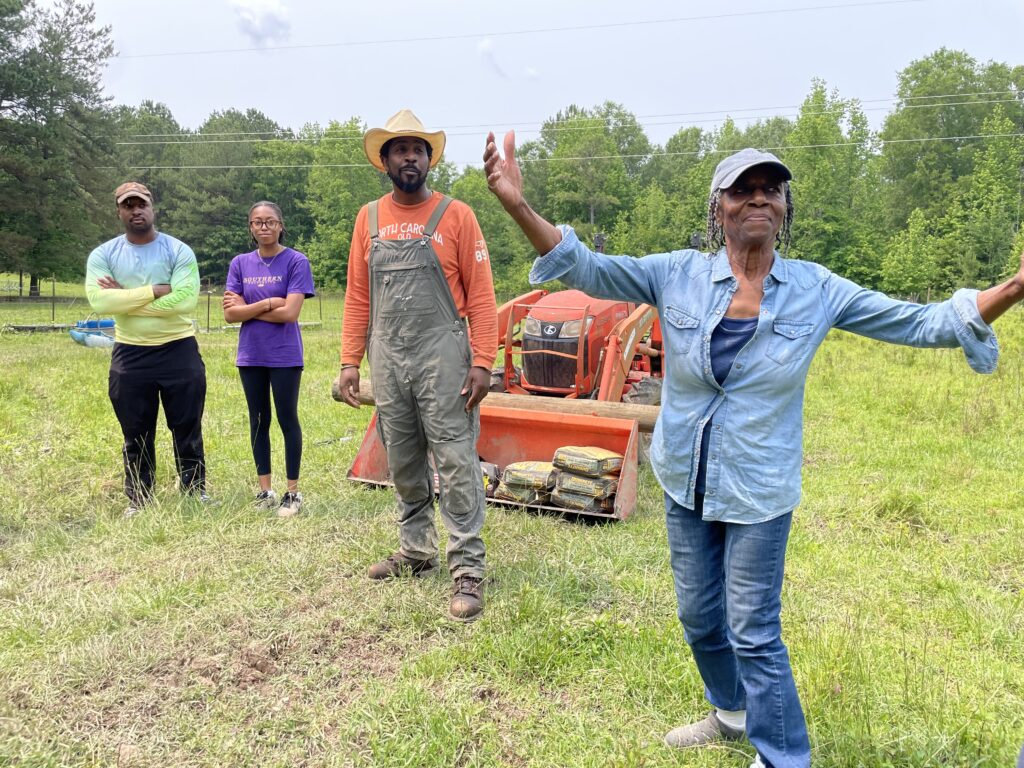
Day one began in Rice, Virginia, at PineBrook Farms with Mama Lafern “Fern” Joseph. A New York native, Mama Fern fell in love with the South after her mother purchased the land in 1968. Helen Joseph, Mama Fern’s mother, held her own dream for the land she acquired at a price she could not pass up. The South Carolina native founded the farm – 123 acres of Southern Virginia rich in hickory, oak, spruce, and pine.
Mama Helen used a straw buyer– one who purchases property on behalf of another – in order to bypass racial discrimination. The farm was formerly an apple orchard, which was cut down by the previous owner once they found out the new owners were Black. Yet Mama Helen carried no resentment; her vision for the land remained. In 1969, she planted her first tobacco crop and, for the next four years, worked in tandem with other local family farmers—growing tobacco while still living in New York. Eventually, Helen transitioned from tobacco to Angus cattle, which was cutting-edge at that time.
After years of traveling back and forth, in 1984 Mama Lafern moved to Virginia to attend Longwood College (now Longwood University) in neighboring Farmville, VA. She sold her Brooklyn home to build a new house in Rice after a tenant had burned the previous one down. When asked what finally pulled her South, she explained, “Between the food and the sweetness of the people, that’s what pulled me south… and there’s something about Southern men.” Today, PineBrook Farms is a certified organic operation with GAP certification growing produce and hemp, producing a range of value-added products from salves to CBD-infused wine.
This year’s brigade project focused on deer suppression. With market demands increasing and a noticeable percentage of crops being lost to local wildlife, the need for deer and rabbit fencing was urgent. Through the USDA NRCS EQIP program, PineBrook was able to purchase supplies for electrical fencing. However, the initial fence stood only five feet tall—well below the minimum eight-to-ten-foot requirement for proper deer control. From this challenge, our goal was born: to add three additional electrical wires, bringing the fence height to nine feet, and to strengthen the corners with wooden posts to improve overall integrity.
The project began with an opening mystica, honoring the land and those who worked it with integrity. Soon after came the ting-ting-ting of T-posts being pounded into the ground in a circumference just shy of a quarter-acre. The chainsaw hummed as hickory and cedar trees were harvested to serve as corner posts, while the kitchen stove burned hot, preparing a meal that had been days in the making. The vision was clear and the hearts were willing—though hands were few. Even with a shortage of help, by the brigades end a nine-foot electrical fence stood strong, with only the farm gate left to be hung on its hinges.
Our next stop was MysticPine Farms with Stephanie Miller in Altavista, Virginia—about an hour and fifteen minutes west of Mama Fern. These farmers often support one another, collaborating on projects and even on market opportunities. Stephanie is a fifth-generation farmer that purchased land link to the same plantation her family purchased from in the 1920s. When Black families were often allotted the poorest parcels, Stephanie’s family was no exception. The land, compacted with rocky soil and mostly forested as it slopes into a creek, now stands as a century farm under her care.
Sister Stephanie family land holds a historic farm number consisting of only three digits. Previous generations lived and worked this land, growing tobacco and raising cows and chickens. Stephanie’s grandfather was the last to farm the land, and today her elder uncle still lives there and helps as a steady hand. This soil has witnessed the snarls of racism that haunt southern Virginia, yet it has held Stephanie’s family – and they have held on to it. MysticPine carries the traits, customs, and legacy of Southern Black Agrarianism. It is a place where people and land harmonize to drown out the echoes of systemic oppression. Here, Sista Stephanie Miller now steers the ship.
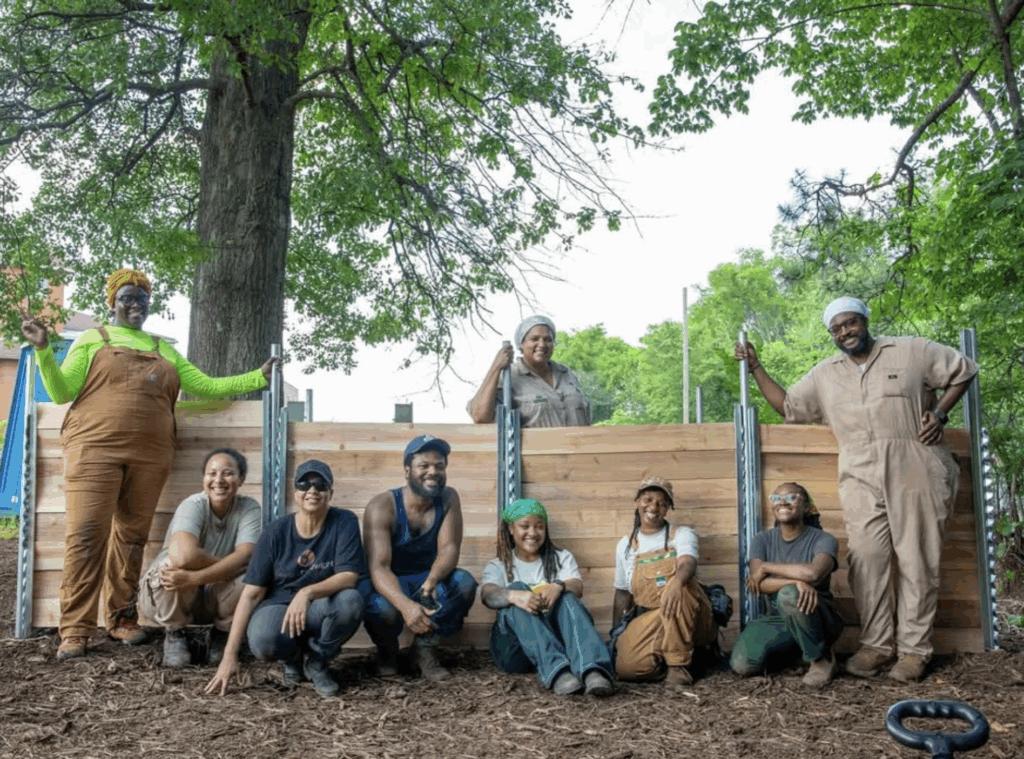
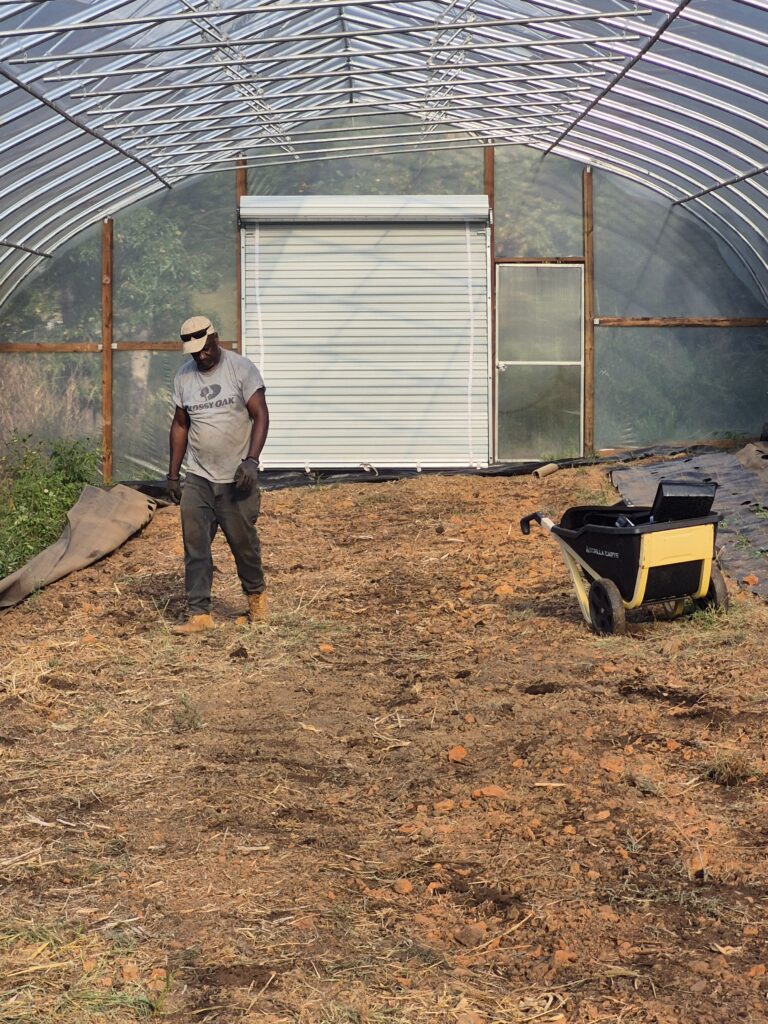
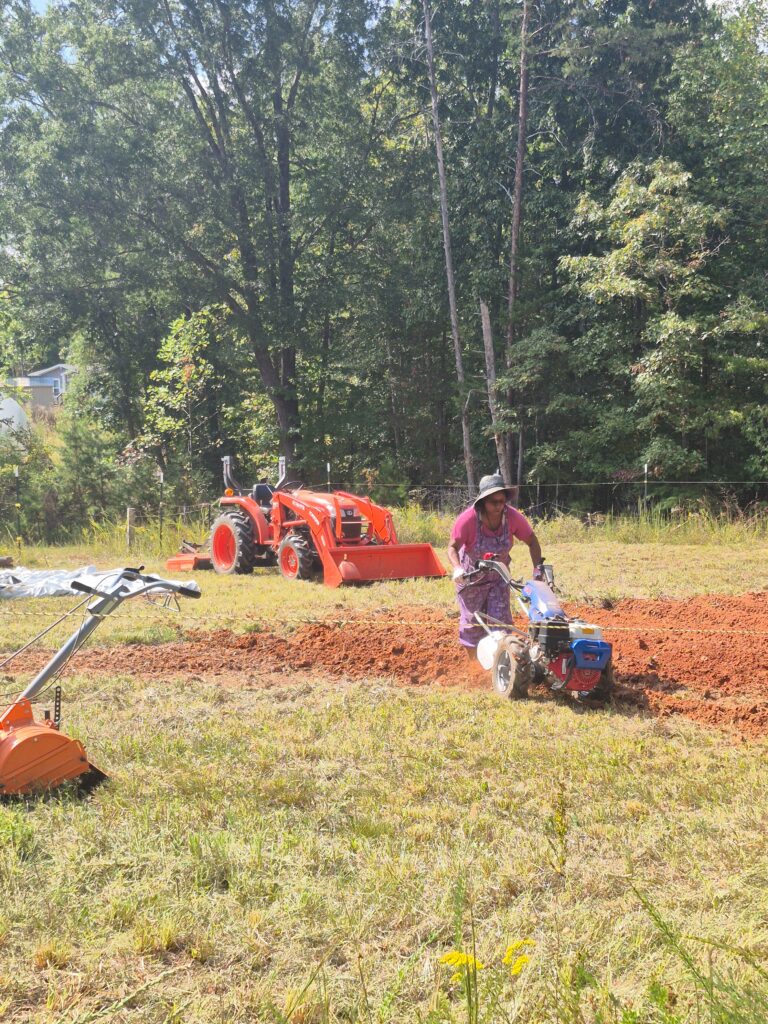
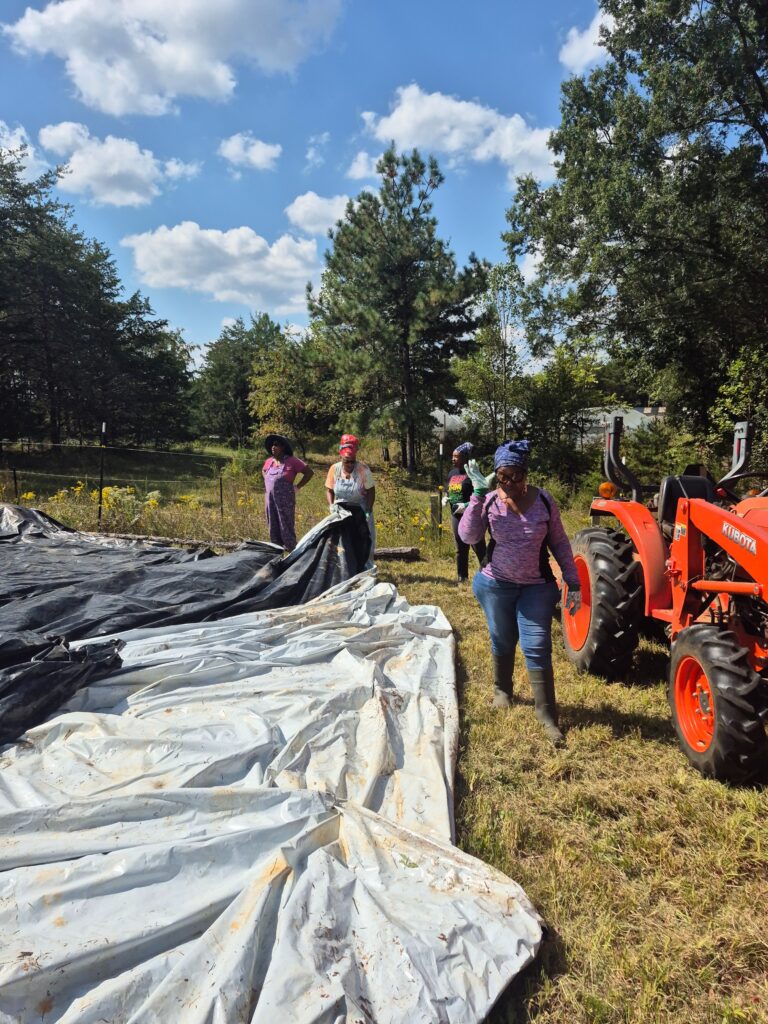
With a vision to create a “therapeutic safe space for Black women,” Stephanie has transformed her family farm into a thriving produce and herb operation, with glamping-quality quarters under construction to expand the MysticPine experience. This brigade was organized to give her a jump start on fall and next year’s planting season through bed preparation. In-ground beds were created both in the field and in one of the greenhouses. Because soil restoration is a high priority at MysticPine, soil amendments were purchased and discussed in depth.
- Cottonseed meal was added as a slow-release fertilizer that also improves soil structure.
- Bone meal was incorporated to reset calcium levels, aiding root development and nutrient balance for plant solubility and structure.
- Blood meal was applied as a slow-release nitrogen source that promotes microbial diversity and increases soil water retention capacity.
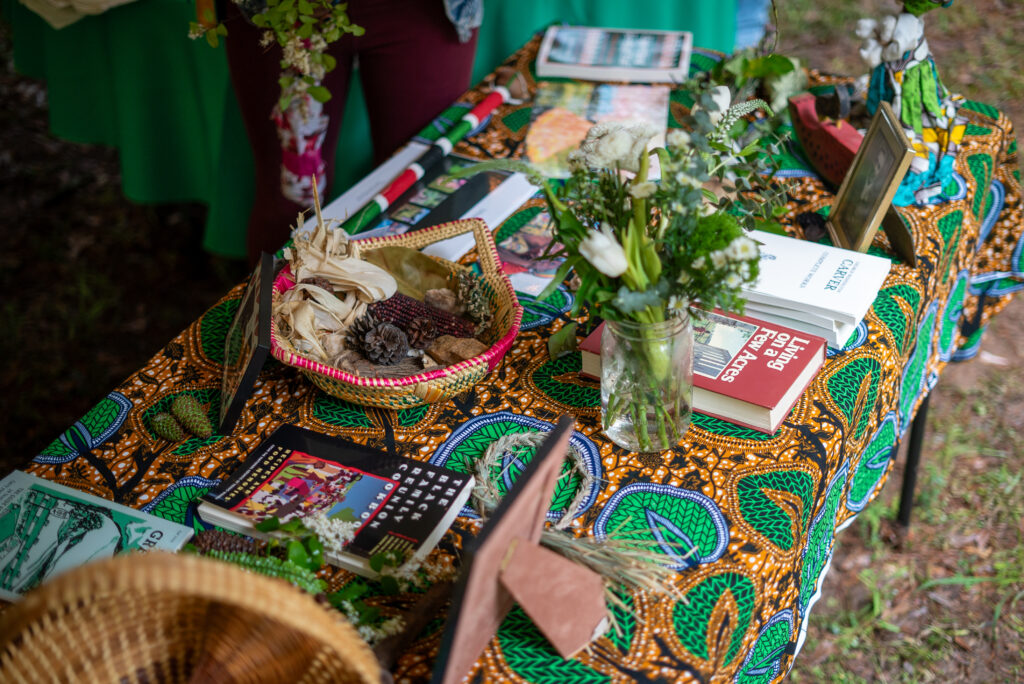
MysticPine reconnected us to South Virginia’s agrarian legacy, from intergenerational collaboration painted in tones of red, black, and green, to songs of resilience attuned to the sovereignty of safe spaces for Black women to come, grow, and heal.
Virginia, too, is a host of Black Agrarian legacy, traditions, and lifeways. Though it holds some of the oldest European settlements and a history steeped in the enslavement of African people, SAAFON Fall Brigades 2025 found itself rooted in resilience, blossomed in determination, and stretched across generations: past, present, and future. With hospitality true to the South, the brigades were a unique blend of ancestral land stewardship kept in alignment with agrarian pathways, and blood-deep visions continued.